Showing posts with label Depression. Show all posts

Wednesday, September 23, 2020

I didn't believe in self-talk, and then I tried it

 "How are you using the word when it comes to describing yourself? When you look at yourself in a mirror, do you like what you see, or do you judge your body and use all those symbols to tell yourself lies? Is it really true that you are too short or too tall, too heavy, or too thin? Is it really true that you're not perfect just the way you are?" 

 -Don Miguel Ruiz 

My therapist has been assigning me homework for the last six months, and for the last six months, I haven't done my homework.

"I'm serious. This week I want you to do it," she told me, trying to be encouraging.

For six months she's been trying to get me to write a list of affirmations I can tell myself.

"Not the cheesy ones," she clarified. "Things you can actually believe."

She said I didn't have to tell myself I would be a millionaire, that I am strong, and beautiful, and brave, or any of those popular affirmations you may see on Pinterest or embroidered on a kitchen towel.

"Just three things every day that you like about yourself," she said. 

I promised I'd do it, and laugh as I hung up, fully intending never to do that. 

It was less about the affirmation, but more about challenging negative self-talk and the lies I led myself to believe about myself, as they came up in my mind. 

The problem is, living with depression, you may know what you should do. You may know what will make you feel better, but because you have depression, you don't feel capable of doing any of those things. 

I'd rather watch paint dry, clip my toenails way too short, or cut the grass with kitchen scissors.

But say something nice about myself? It seemed too tough a task. 

As an empath through and through, I don't like to think too much about myself. I don't like to sit alone with my own thoughts. I have depression. It could be scary there. I rather talk about what's bothering you. I'll listen and help you! Yeah, that idea I like! 

But through breakups, pandemics, self-growth, and self-reflection, I'm realizing, that's not always an option. 

What happens when someone's not there to vent to me? Who's left? 

Me. 

Shit. 

Bueller?          Bueller?        Hello?        No?        *Sigh*        

Okay, number one. 

The day I finally completed my homework, I was really excited to start our therapy session.

"I did it!" I proudly told her, chest puffed out.

I listed off one thing after the other that I love about myself. 

When I was done, I smiled at her, waiting for my round of applause, for her to tell me she was proud of me for finally listening. 

It never came. 

"What?" I asked.

"None of those things are about you," she said.

"What?!" 

Each thing I had listed about myself involved another person, she told me. It wasn't truly, at it's core, me. 

Again, I was diverting the attention elsewhere, in order to not have to focus on myself.

Again, she gave me the same lecture about self-talk and affirmations.

I was mad. I could have sworn I nailed it. 

Another thing about living with depression, is you feel impulsive. You may know the thing that will make you feel better, something that is healthy that will lift your mood and remove you out of that dark place, but, because you have depression, your mindset is: 

"Sure I know what to do, but the healthy route may take 45 minutes, while the unhealthy option only takes five!" 

This to me is the "get what you pay for" mindset. If you go the route of a temporary release, like seeing an ex that treats you poorly, drinking, using a drug, sex, gambling, or any other short-term solution, you have to consider the long-term consequences of that choice. 

How will you feel in an hour? six hours? tomorrow?

Probably not good. You may feel more anxious, more depressed, crave comfort food, want to sleep more, etc. 

Depression doesn't allow you to think through those long-term consequences. Depression is a one-track mind that tells you, "I feel horrible, what can I do to feel better right this second?" and laughs when the negative affects of the short-term solution route start to kick in. 

The more I talked with my therapist and she reiterated the idea of affirmations and self-talk, I begun to practice it, without realizing it, which is probably the only way to get me to do something.

Coming home from a stressful day, whether it be from work or a fight with my ex, rather than reaching for a short-term solution, I would take the time to slow down and acknowledge, "hey, I don't feel so great right now, and what I want to do probably isn't what I should do." and rather than reach for the short-term solution and risk the negative affects, I'd lace up my rollerblades, put on my headphones and go for a skate, or have a cuddle with my cat, swim in the pool, color a picture, etc. and I would end up feeling better, for a longer period of time, than I would have if I had chosen the alternative route. 

When I'd settle in for the night and start feeling lonely, rather than text my ex, which I would likely later regret, I'd say, "you know what? I don't need to do that. That isn't the best option for me based on how I'm feeling," and put on a funny TV show and have a laugh instead. 

Self-talk is HARD! It's not easy to take the time, especially in the moment when your emotions are high and unpleasant to slow down, acknowledge that feeling, and choose a healthy option. But I promise you, you will feel better if you choose the healthy option. 

Don't wait until you are in that emotional state to think about what a healthy option is for you. Have three go-to things that make you feel genuinely happy: maybe it's working out, writing, taking a hot bath, lighting your favorite candle and putting on an album, drawing, coloring, whatever it may be. Have them in the bank and know what they are. 

And when you feel yourself start to get in that emotional place, stop. Take a moment to acknowledge the fact that you're in an emotional state, and what got you there. Acknowledge it for what it is, without blaming yourself, and dismiss the desire to reach for a short-term solution. This may be having a cup of tea instead of alcohol, putting your phone on airplane mode, or going for a walk to re-center yourself. 

It may take half an hour longer, but the effects will last way longer and you will feel stronger in your ability to choose that option for yourself.

You can do it.

I believe in you.

Sunday, January 13, 2019

Bringing your eating disorder on vacation

"Don't let your mind bully your body"
The first thing that comes to mind when I plan a vacation is: where am I going to go to the gym?

There have been too many instances where my eating disorder has gotten in the way of truly getting to experience new things, or enjoying old things with my friends and family; like passing up pizza and bagels in New York, refusing to go to restaurants with my sister in California, and opting for only salad at the all-inclusive buffet on a cruise. My eating disorder loves to vacation, despite the fact that she was never invited.

My family has a tradition to go on a cruise every year at Christmas.

This year was a 7-day cruise of the Caribbean.

Before we were set to depart, immense anxiety set in. I had a good routine going at the gym, and I depended on it to manage my depression. My mom said that she didn't want me going to the gym every day on the cruise, only days when we were at sea.

I didn't like that restriction.

She told me she didn't want me eating only salad.

I didn't like that restriction.

I didn't like the rules. My eating disorder hates rules. She hates knowing she's being watched, and likes to act in spite of rules. I was going to work out. And most likely, I was going to only eat healthy.

She was not invited, but like always, she threatened to stow away in my carry-on. She goes where I do, she reminded me. She did not need a formal invitation.

Sometimes rules can help.

I don't like to count the days of recovery, because every day is work.

When focused on recovery, making rules can be really beneficial in staying on track. For me, the rules were almost anti-rules. Every rule my eating disorder made, for example what foods were considered 'safe', or rules about working out, my recovery mindset would be the opposite.

I promised my mom that while we were on the cruise, I would only go to the gym on days we were at sea all day. When we were at port, we would be walking around and exploring for the majority of the day, so we would still be getting exercise. Plus, I didn't want to be tired or sore.

I told myself that I would not use food or exercise as an excuse to miss out on experience. If my mom or sister asked me to do something, I would do it. I would not skip anything, because I had to go to the gym.

When my mind challenged me, I reminded myself that indulging in a few meals I would not normally eat would not throw me off-track. Having dessert would not cause me to gain a significant amount of weight. Not working out for a few days would not throw off my progress. Vacation is meant to be enjoyed. I reminded myself that my diet and my gym would be there when I got back home. The things in front of me, like local beer, decadent desserts, homemade pastas were not always available to me.

New things

I have never known a vacation where my eating disorder was not along for the ride, so this trip felt truly special to me.

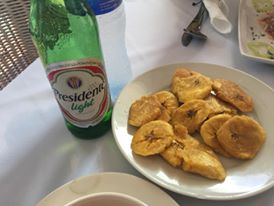
I tried the local beer at every port we stopped at. I had plantains in Dominican Republic. We went to a chocolate factory, where I had the best hot chocolate I ever tasted in my life. I bought two candy bars to bring home, that never made it home, because they were so good. I had rum at Casa de Bacardi in Puerto Rico. I had homemade pasta on the cruise three nights in a row.


We learned how to roll cigars in the Dominican Republic, and in the Bahamas I snorkeled for the first time in the bluest waters I've ever seen.


Of course in the back of my mind, old thoughts were always there. But, I didn't allow myself to act on them. I reminded myself as often as I needed to that these experiences were once-in-a-lifetime.

At the end of the trip, I felt happiness, because I did not allow food or exercise to get in the way of experience. I spent time with my mom and my sister, and I was not angry, or bitter about food or exercise. I wanted time and connection. I felt happy that I was unchained from the disorder for 7 days to truly experience new things, and at the end of the trip, I did not have feelings of guilt that I missed out, or I didn't do something that I wanted to do, and that my mom and sister did not feel burdened or as if they missed out because of my disorder.

Given that eating disorders thrive off rules, I think setting 'anti-rules' can be helpful for some in breaking disordered habits. For example: "I will only go to the gym when x, and if someone invites me to do something, I will not say no, because I feel like I have to go to the gym", or "I know vacation is only x days, so I will try local foods", "I am only home for so long, so I will eat my favorites with no guilt"

At the end of the day, I think there is more unhappiness brought from feelings of missing out and missed opportunities, than if you ate the cake, or had the beer.


Sunday, December 9, 2018

Goodbye, 2018


It feels like just yesterday we were gathered around the TV at the bar, counting down the seconds until the ball dropped, bringing in 2018.

It's now December, and as I type this, I'm on the other-side of the country.

I feel as if things have come full circle in a way. This year brought many changes, both positive and negative, but I wrote my way through them both.

I look forward to the new year and seeing what new opportunities it has to offer.

I'm entering the new year with hope, optimism, and fearlessness.

What I'm grateful for this year:
  • At the 2018 NEDA walk with my sister in Santa Monica, CA. This was the second year we fundraised and participated in the walk.

  • Participating in the 2018 NEDA walk. This was the second year we started a team, raised money, and participated in the walk. It means so much to me that our friends would give up their Saturday morning to support this amazing organization that provides life-saving information and resources. I will always be happy to support this organization.
2018 NEDA walk in Santa Monica, CA. It means the world to me that our friends would give up their Saturday to learn about and support this life saving organization and support my recovery.


  • Meeting an amazing group of friends in LA. I struggled in LA navigating a different way of life than I was used to. I was lucky to find a group of genuine friends.
With my sister at her birthday celebration. Welcome to the last year of your 20's!
We rented a boat in Marina Del Ray for my sister's birthday

  • My sister and I getting to celebrate our birthdays together. We don't get to do this too often. Welcome to the last year of your 20's, Alex!

If you're a bird, I'm a bird

At a polish restaurant for Alex's birthday. One of our favorite places in town
Celebrating my birthday with friends at the Saddle Ranch

  • I was happy to celebrate my birthday with friends. I never really planned anything big for my birthday since I was a kid, so it was nice to have my friends come together for this night. We saw a comedy show, then went to a country bar in Hollywood.


The third Kwasnik sister?

  • Getting to share the story about my eating disorder recovery in a Sunday edition of The Tampa Bay Times. This was a hard one for me to write. Though I write about my recovery journey often, this story gave me the opportunity to share with a much larger audience. I wanted to express certain points and provide helpful tips to any families that may be experiencing similar things. I didn't know where to start- I had so much I wanted to say! I'm so grateful for the Times for their support, and their willingness to publish a story like this, and for the editors sensitivity during editing, and checking in on me that I was comfortable throughout the process.

My story online

I was blown away when I saw the space they gave my story. The artist did an amazing job depicting what I wanted readers to take away from my story


My former editor, friend, and journalist role model, Ernest Hooper, even gave me a shout out in his column. I was so surprised by this !


  • Growing in my yoga practice. I used to never be a huge fan of yoga, because it has always been hard for me to slow down and be present, because my depression always caught up with me. I felt like the wheels always had to be in motion, and I always had to be moving. I was on the run, and I was tired. My practice has helped me tremendously with repairing my relationship with my body: I appreciate seeing the progress in my strength, and what my body can do.

I never thought I would be able to do this!

Yoga has taught me that it's OK to go slow, be present, and take the time needed for yourself

  • Getting to live in Santa Monica, California, for a year and a half. Despite coming to the realization that this life wasn't for me, living there, and with my sister allowed me to heal and fully immerse myself in recovering from my eating disorder and depression, and get over that hump from being out of the hospital. I met an amazing group of friends, I had some great opportunities in my career. My sister and I had the opportunity to bond and spend a lot of time together that we don't often have, living on opposite sides of the country. I will forever be grateful to my sister for her patience with me during this time, her support, and overall, just being there for me. Always. I love you, sis.

Santa Monica is incredibly beautiful. We were fortunate enough to live nine blocks from the beach and Santa Monica Pier. Everyone should spend some amount of time here.

Spending time with my sister and some of my closest friends, before I left for the airport to fly back to Florida. 
  • Accepting a full-time journalism job at the Charlotte Sun in Port Charlotte, Florida. The opportunity provided me the ability to do meaningful work that I love every day. I immediately fell in love with my new community and the people here, and feel honored to be able to elevate their stories to a larger audience.
  • Moving back to Florida: the first and only place that I fully considered my home. I feel as if I breathe easier without the pressure to put on some kind of show, or keep up a lifestyle that doesn't fit who I am.
I'm only a few hours from my mom, so I can go home whenever I want and cuddle with this sweet angel. I realize I can never be too far from my family, or I will feel lost.


Punta Gorda, Florida

  • New friendships and new relationships. I've had some amazing friendships develop this year, which I'm truly grateful for. Friendships are extremely important to me, and I feel lucky to have friends around the country, who I work hard to stay in touch with. You put in the time for things that matter to you. I believe everyone comes into your life for a reason, whatever that reason may be, to provide you whatever you need at that specific time in your life. Regardless of how long that relationship lasts, I never harbor negative feelings. I thank them for what they taught me, and wish them well. 


Goals for 2019:

-Focus on myself, my career, and only things that make me feel happy and alive.
-Cultivate positive friendships
-Eliminate friendships and relationships that no longer serve me
-Write something at least once a week
-Read 25 books this year
-Do things that make me happy and stop asking for permission
-Stop seeking validation from people I shouldn't need validation from
-Be a little more selfish

Monday, December 3, 2018

Joining a gym post-recovery

"Recovery is something that you have to work on every single day and it's something that doesn't get a day off." -Demi Lovato

Early in my recovery, working out was my biggest fear. For me, exercise has always been a slippery slope, as I didn't know how to do it halfway, in a healthy way.

When I was in the thick of my eating disorder, I remember working out until I felt faint. I would go to the boxing gym on an empty stomach, throwing all of my weight at the bags as if my life depended on it. Because in my eyes at that point, it did. My mom was worried because of my weight, I might break a bone. But, I refused to take a day off.

I wanted to work harder than anyone else in the gym, never realizing that no one else was competing. I felt frustrated when my body refused to run on fumes, instead, forcing me to tap out of my workout early.

I felt there was no bigger failure. No bigger embarrassment than people thinking I couldn't make it through a workout.

I had rules when it came to the gym. Lots of them: what I would eat beforehand, how long I would stay, what muscles I would work, what to eat afterwards, or what not to eat.

Two years into my recovery, I had to admit that I'm still not positive how to workout healthy all of the time. I worked at three different gyms, never understanding what my mom meant when she said it was like an alcoholic working in a bar. I thought I could handle it. For me, it was like working in a bar. I could workout whenever and as often as I wanted. And I took full advantage.

I worked out six to seven days a week for an hour and a half to two hours. I was already in the gym for my shift, so it was very easy to work out for thirty minutes before and after work. I was already there, so I would feel guilt for not working out. Not using my time wisely.

When you have a history of exercise addiction, it's a very thin line between healthy behavior and obsession. That line was not often clear to me, especially since I was still trying to hide from my friends and family how much time I was actually spending in the gym.

Behaviors and habits from my eating disorder were still there, and I thought that I was on top of it, but I often acknowledged them, then ignored them.

A co-worker would comment on how much weight I lost... I would briefly worry that I was backtracking, then feel a sliver of pride that I was losing weight again.

When I moved to Florida, I was worried about not having access to a gym, and whether I would gain weight. My mom thought it would be best if I didn't join a gym right away, I thought it'd be best that I did, and not mention it.

But, I wanted to approach it in a healthy way. To do so, I would need rules. A lot of them. A different kind of rules. So, I asked for help. I asked my friends and family what negative behaviors they saw I had surrounding the gym, and made a base list of rules for me when I decided to work out:


  • Never skip an invitation, because I have to go to the gym (regardless of how bad I might not want to go)
  • If I'm tired/sick, etc., do not force myself to work out
  • Do not spend longer than an hour and a half
  • Do not use the gym as punishment for having ate/drank anything
  • Practice intuitive exercise/ intuitive eating
  • If I feel faint, go home, eat, re-hydrate and rest
  • Do not step on the scale under any circumstance
  • If I feel like I'm struggling with over-exercising, ask for help. Be honest about how long I'm spending in the gym
  • Eat to fuel my body, refuel. 
For those looking to get back into a work out plan post-recovery, I would say it is definitely possible. Intuitive exercise is the best approach. Find a way to move your body that makes you feel happy (dancing, boxing, swimming, etc.) Moving is not a way to punish your body. Also, don't rush getting back to the gym. Allow your mind and body time to heal. Ask for help from your support system when and as often as you need it. And most importantly, be kind to yourself. Two years into recovery, I mess up often. When I am stressed, it is easier for me to over-exercise as a form of distraction. When I am hurt, upset, or any other negative emotion, I feel triggered easier, and head to the gym. You will mess up. It's OK. Hold yourself accountable, be honest, and start again. Ask yourself what triggered you, and find an additional method of comfort/distraction besides the gym to practice self- care. 


Wednesday, May 16, 2018

My first experience with therapy

"Talking to a therapist, I thought, was like taking your clothes off and then taking your skin off, and then having the other person say, "Would you mind opening up your rib cage so that we can start?" -Julie Schumacher

 I started middle school just after my parents announced they were getting divorced.

For awhile, my relationship with both of my parents was pretty much nonexistent, while I tried to figure out how I felt. Growing up, none of my friends parents were divorced, so I didn't ever consider it an option for my parents. Until it happened.

I don't remember who was in touch first: whether it was my mom with the school guidance counselor, or her with my mom. But somehow the pair ended up working together in attempt to get me to talk about my feelings.

"I don't want to."

"Brianna Kwasnik to the guidance office," I heard over the loudspeaker one day during class.

I rolled my eyes, and told my teacher I would go in between classes, as an excuse to get out of it.

I would have hall passes written for me and sent to my class to excuse me, but I would crumple them up and throw them in the trash.

The next day, one would came laminated. And I threw that out, too.

When I finally went to the guidance office, I stared back at the woman like she was speaking in a different language. She told me all of the things she was supposed to say to make me feel safe, like how her office was a safe space, and everything I said to her would stay between us.

I felt like I was wasting my time and hers, because I didn't feel like I was old enough to have any real problems. I didn't want to talk about my parents divorce, because than that would make it real, and I didn't want it to be real. When my parents first got divorced, it was a lot of back and forth with both my mom and dad trying to vent out their frustration with the other one, and me being the soundboard for those frustrations. I felt exhausted. I wanted to love them the same as I did when they lived in the house. I didn't want to think of them different or see them any less. I didn't want it to be real. But, I didn't want this stranger to know that. I didn't want anyone at school to know that. I didn't want anyone at school to know what was going on at home, it was none of their business, I thought.

I was really concerned about being seen walking out of the guidance counselor's office. I grew up with a stigma of sorts surrounding therapy, that talking to someone made you 'crazy' or weak, and I didn't want to be that, because I knew that wasn't who I was.

My dad was against it completely, and didn't want me talking to a stranger.

Eventually, I had warmed up to the idea, and when something would happen at home whether it be my dad talking poorly about my mom, or my dad not answering my phone call, or when he moved out of the house, I couldn't wait to tell someone about it and get it off my chest.

My school guidance counselor had sent my mom a list of therapists that I could see outside of school. I think her referral was a combination of not wanting to take me out of class anymore, and seeing how much my parent's divorce really affected my spirit and confused me.

It's always weird when you switch therapists, and you feel like another person knows your whole story, and this new person should just pick up where she left off. Like what do you mean I have to start from the beginning? Where do I begin? How far back do I go?

At first I did not want to talk to a new therapist. I never do, and usually spend the first two sessions having them prod me with questions and me giving generic one or two word answers, and nothing more. When I started going to counseling for the first time out of school, I had my mom sit in on every session. I wanted her there as extra support.

Once I felt comfortable enough to open up and talk about how I felt about what was going on with my parents divorce, it was like a faucet that wouldn't turn off. An hour came and went, and never in my life had felt shorter. Every week I didn't know I had so much to say.

The great thing about therapy, is that the person isn't there to judge you, but to help you make sense of a certain situation with an outside perspective.

If I was talking about my mom, maybe she would be able to help me see things from my mom's perspective. Maybe she would be able to give me advice on how to work things out with my mom. If I was talking about my dad, she might be able to point out a pattern in his behavior that I couldn't see.

In time, I was able to take her analytical skills, and when I would talk about things, I would share, then cut her off, already making my own inference about why things happened the way they did, or why I reacted in a certain way.

It quickly became a relief for me to get my feelings out and not have them pent up inside of me. I wasn't carrying around burdens that weren't mine to bear, and if they were mine to bear, I can put them down in her office, and move on. My therapist and my mom encouraged me that if a bad feeling came up that I wouldn't stew in it, I could open a journal, write about it in the moment and release those feelings on paper.

Between therapy once a week and writing in my journal, which I could do whenever I needed to, it felt like a purge. It felt like the feeling you get after an intense workout and the happy endorphins are released. You feel lighter, at ease.

Like anything else, everyone's experience is different, but I'd say therapy is always worth a shot. It's important to research therapists in your area- see if they take your insurance, maybe you prefer a female therapist over a male, or the other way around. If you're currently in school, see your guidance counselor or school therapist, most colleges include therapy in the school insurance plan- use it to your advantage! And most importantly, develop your own opinion on the topic and don't pay any mind to what other people think. If someone is putting down the idea of therapy, they could just not have a lot of experience with it or know a lot about it. If it helps you, that's all that matters.


Monday, May 14, 2018

My thoughts on medication

"All the commercials on TV today are for antidepressants, for Prozac or Paxil. And they get you right away. "Are you sad? Do you get stressed, do you have anxiety?" "Yes, I have all those things! I'm alive!"- Ellen DeGeneres
-------------------------------

I used to be extremely anti-medication to treat depression. That's just the way it was in my house, and the way we were led to believe that taking medication for depression or anxiety would alter your personality, or numb your feelings to the point of living in a zombie-like state. 

A large part of what turned me off from the idea of taking medication, was that it was the first 'solution' offered to help me with my depression.

I was eight years old when my doctor first recommended a prescription. I don't remember exactly what the medication was. My parents had just announced their divorce, and my dad would be moving out of the family house. 

Of course I'm depressed, I thought. My dad is leaving!

As I got more and more passionate about writing, I wanted to stew in the pain that I was feeling. I can use this, I told myself. I'm sure there's other kids who are feeling like me, who feel they are alone in receiving this news. When you're a kid and your parents announce they're splitting, you feel like that is the end; like you will never be part of a family again and that's it. Things don't look hopeful. Add in some messy components, with the transition of starting middle school soon, it's naturally a very turbulent time.

Most of all, I didn't want to feel like I wasn't normal, like I had to depend on a little white pill in order to feel alive. Why couldn't I just be alive? At the time, I was hiding the fact that I was going to therapy from my friends. If they had asked what I was doing after school, I would just say that I had plans with my mom. I couldn't fathom my friends finding out I had to go to therapy, let alone take a pill for my happiness. When you're a kid, you worry about these things, how people perceive you. 

My mom thought I was much too young to go on medication, she didn't want me to have to rely on a pill, and she thought that as my body adjusted to it, I would have to take more and more to get the same affect. We had no real experience in the side affects of antidepressants, because people around us just didn't talk about it.

Having been diagnosed with depression from such a young age, I have tried every natural remedy there is. I incorporated tea into my diet, I was already vegetarian and regularly consumed large quantities of fruits and vegetables, I minimized processed foods, I exercised more than anyone I knew, I did yoga, meditation, I listened to calming music. But as soon as the activity was over, the sadness was still there, roaring like a wildfire. 

The thing about depression, my therapist told me one day, is the more you try to conquer it naturally, the more likely it is to come back, and the more severe it will be when it does, and the less time you will have between bouts. 

I was told this during my freshman year of college. I was having an extremely hard time being away from home for the first time and on my own, and had fallen deep back into the throes of my depression. I had a hard time getting up to shower, I didn't enjoy going to work, or exercising. Nothing seemed exciting to me. Life had begun to feel like a chore. 

I told the therapist my concerns, and fear of side affects. I was very in-tune with any changes to my body and how I was feeling, having managed my depression naturally for so long. But, she was persistent. And I agreed to try the lowest dose of Lexapro. 

The doctor warned me to give it some time for my body to adjust, but to take note of any adverse side affects I was experiencing. 

The first night, I woke up in the middle of the night with itchy skin. I felt like my arms and my back were burning. I walked to the sink and rubbed water up and down my arms and splashed it onto my back. 

The next day, I told the therapist it wasn't for me. 

She insisted that maybe that specific type wasn't the right fit, but to try another. 

I insisted my ability to conquer it on my own was greater than whatever concoction was inside that pill.

I didn't try another medication until the summer after my sophomore year of college. I was staying in my hometown for a few weeks, and my surroundings again were pretty new having not spent a long amount of time there in a few years.

I went to my family doctor and told him about the anxiety I was experiencing. Even in places I used to feel comfortable and with people I used to feel comfortable around, suddenly I'd become overwhelmed with anxiety.

My depression was not new, I had become more adept to dealing with it, but the constant bouts were causing me to lose hope of ever shaking it 'naturally'.

My doctor prescribed me a fairly large dose of Prozac. I was not hopeful, but I felt desperate to give anything a shot at feeling normal and comfortable again inside my own body. I would give it a longer shot for the side affects to wear off and even out.

About two or three weeks on the medicine, it was the first time I ever truly contemplated suicide.

I remember first losing track of time. I was laying in my bed with no motivation to get up, just staring at the wall. I felt hopeless that my life would always look like this and it would always be an up and down battle of bout between feeling sort of 'OK' and feeling restrained to my bed, buried by my depression.

After becoming afraid of the thoughts the medicine produced in terms of wanting to take my own life, I called my doctor and immediately went off the medicine. I decided it was just something that didn't seem to work for me.

I did fairly well managing my depression through a combination of writing, drinking tea, limiting alcohol intake, and exercising regularly.

However, my depression resurfaced during my senior year of college in a way that I did not recognize.

Suddenly, it became hard to eat. I felt like physically I could not sit down and eat a meal. I was too sad to take the time to slow down and have that time for myself. I became afraid of the food that I knew would properly nourish my busy days. I was scared of what would keep me alive.

In September of 2016, I was admitted to ICU for the second time with severe depression and anorexia. My heart rate was in the high 30s, and I signed a 'DNR' because I did not want to live anymore.

My doctors had asked me if I wanted to speak with a therapist, but I declined. I didn't think there was any way that they could help me. Just like the doctors had done, I had wrote myself off as being a lost cause. They recommended trying an antidepressant or an anti anxiety medicine, but I declined, because of how my body had reacted in the past.

Eventually, it became so overwhelming, where I was not able to properly take in food, or concentrate long enough to hold a full conversation, that I turned the corner and was willing to try anything one more time to give me a shot at life.

My doctors started me on a low dose of antidepressants, one I have never tried or heard of before. I had told them my previous history with medication, and she told me she had a high success rate for this one. I felt hopeful and trusted her.

Two days after I started the medication, I felt like a cloud was lifted from my thoughts. Things had turned from a dark shade of gray to a mild one. I was able to sit up in my bed and greet my mom. I was able to focus on our conversation and I felt like I wanted to talk. I wanted the company. Things were going in the right direction.

The medicine had helped me get my will back and slowly I began to care less about the food I was putting in my body. My brain was no longer rejecting it for whatever reason it could come up with to avoid the food. My brain wasn't preventing my life source.

I've been on the same medication now for over two years, and sometimes I am in awe of how my life looks like today. Having dealt with depression for so long, I didn't think it was possible for me to feel genuine happiness and feel comfortable in my own skin and my body. I think back to these low times and I feel grateful for those people that did not let me give up.

I have people ask me how I managed to get my depression under control, like there is a one-size-fits-all approach. Believe me, I know how disheartening it can be to feel like there is no hope. I know how frustrating it can be to try natural approach after natural approach and not see the results that you had hoped for. I know how scary it can be to try a medication that you have an adverse reaction to, or does not work well enough for you.

Treatment is a lot, a lot of trial and error. And ultimately, patience. First, decide what you want as a treatment approach is a very personal thing. If you believe your specific instance may require and benefit from medication, do your research and talk to your doctor. In talking to a doctor, I would question any doctor who jumps to prescribe you medicine before fully understanding your diagnosis and your situation. Are you in a particular time of stress? (moving, break up, loss of a family member, starting school, etc.) These may not require medication, but could benefit from journaling, or eating more fruits and vegetables, moving your body with exercise, talk therapy, etc.

I would recommend keeping a journal throughout your treatment to document how your mood changes with each treatment approach. This is the best way to find out what works for you and what didn't, and go back to the drawing board.

Remember: what works for one person will not work for everyone. Some people will benefit from a low dose of medication, and others may need a higher dose of a different medication. 


Monday, April 9, 2018

Trying on clothes post-recovery

Like everything else in my life post-recovery, I have a complicated relationship with shopping.

Through mainstream media and fashion, we are sold the idea that a size zero or size two equates to happiness: the best clothes, the hottest men, etc. 

For awhile, I bought this idea, too.

I worked hard to lean out my normally size eight body. I always ate well and exercised hard, so I couldn't understand why my body naturally gravitated and felt comfortable at a size eight.

That's too big, I told myself.

As I fell down further of the path of restricting, the weight started to slip off my body. Fast.

One would think this would have made me happy, but I was more uncomfortable than ever before.

Trying on clothes, I wasn't sure what to do. I have always preferred my clothes to fit me loosely rather than tight. It's a combination of the fact that I live in Florida, and want lighter, and looser fit clothing in the heat, with the added factor that I have always been uncomfortable with my femininity. Having what I deemed a 'larger' body, i.e a bigger chest, bigger legs, etc. I didn't want to show that off. 

I was always sold the message of small, and to do what you can to make your body smaller, take up less space. 

Now that my frame was smaller, I thought I might try on smaller, tighter clothes. Having a distorted perception of my body, I thought I looked good and wanted to show it off. 

But I was still unhappy. 

My body started to feel like a shell. An overworked, under-nurtured shell. There was no longer anybody home. No one inside.

As I looked in the mirror trying on clothes, I would begin to get upset as bones replaced where skin once protected what was inside.

I looked away before the tears started to fall.

I was sold the idea that a size zero would make you happy, you would look your best, feel your best, etc. However, having strayed so far from where my body felt naturally comfortable, I was anxious all of the time. This wasn't my body. 

I would throw the clothes over my head quick enough to tell if it fit, than I would take it off just as fast and decide whether or not I would make the purchase. 

I need to have something that fit.

I was going through clothes fast, and I couldn't stop.

Even my underwear began to slide off my body inside my shorts. 

It was too big. Nothing fit.

It felt like a direct daggar to my heart to watch my moms face fall as she watched me go into the fitting room with the smallest women's size in the store, and come out with three fingers in the side of the jeans, demonstrating it was too big.

My mom cried, and I returned to the fitting room so I could, too.

When the doctors told me that it was no longer safe for me to exercise, I gathered up all of my activewear from my closet and hid it in a drawer in the corner of my room, that I knew I wouldn't open and have to come face-to-face with on a regular basis.

It hurt me to see them. It tempted me to see them. I wanted to exercise.

Living in South Florida and being dangerously underweight, I spent most of the year, and all of summer in over-sized sweaters. I was always cold. 

I will never forget the feeling of immense shame when my mom had to take me to the kids section of Walmart in order for me to find clothes that fit.

I was just released from the hospital and desperate to get out of my clothes from the hospital closet. I wanted to throw them away, and never think of them again.

My mom picked out a few T-Shirts, and long sleeves from the boys section in various colors, and two sweatshirts to keep me warm.

As we walked, I held up my underwear with one hand to keep it from sliding down into my pant leg.

I was embarrassed to admit to my mom that I needed underwear that fit me. Having to hold it up throughout the day was making me angry and filling me with shame that my body was disappearing more and more everyday.

I whispered to her, and without a second thought my mom went over to the girls section to look for a pair that might fit me.

A 21-year-old woman should not have to be shopping in the girls section for clothes, let alone for underwear.

As a group of hot guys my age passed, my mom held up a pair of Halloween underwear with cat ears on them,

"how about these honey?" 

I looked at the boys and in that moment hung my head and wanted to sob. This was anything but sexy.

My once curvy body has been diminished to that of a six-year-old girl, and to add shame to the already blazing fire, it had cat ears and glitter.

As my body healed and I began to recover, my body started to fall back to it's natural weight, where it functioned best and felt healthiest finding clothes that fit again became a source of stress.

Luckily for my budget, I hadn't thrown away my old clothes before I had gotten sick, but in some way, it felt like a loss as they started to become less and less loose on my body.

My mom helped me accept the fact when she said, 

"just remember, these clothes [referring to the smaller clothes I had purchased] were never supposed to fit your body."

Rather than becoming disheartened when the smaller sizes didn't fit, I took my mom's advice and stopped trying them on. They were never my clothes. That was never my body. 

I rounded them up in a bag for GoodWill, and donating them, almost as if disposing the evidence that they had ever existed in my closet. They were never intended to be mine.

When it came time to purchase new clothes, I reunited with my old enemies- the fitting room, and the mirror. 

I tried not to look at the sizes of clothes past the point of picking them off the rack. 

If they fit and I felt comfortable, I would buy them, if not I would simply return them to the rack and try again.

To this day, I hate trying on clothes, but I take a few steps to make it easier mentally on myself.

First, I try not to judge my body. Which is the most difficult of all. If I am feeling bloated, I opt not to go into the fitting room at all, knowing the disordered part of my brain will have a field day dissecting my flaws and reminding me of them. In relation with this, once I feel that disordered part of my brain start to pick, I take it as a sign that it is time to stop. Shopping is no longer fun, and it is time for me to call it a day and do another activity.

Second, I don't focus too much on the size. I choose the size that I feel most comfortable with, which is a larger, looser option, and if it doesn't fit, I don't berate myself on why I can't fit into that given number. Every store has a different cut of clothing, so in some stores, you may be a different size than in others. In some stores, the clothing runs small or runs large. 

Third, I'm trying to put in practice more to stop following trends and what I see in magazines, and stick with what I know I like and feel comfortable in, that way the pieces will have longevity for me, and will be a staple in my closet.

For me, I like activewear, leggings, shorts, and T-Shirts when I'm at home, when I'm working, I like a loose blouse with pants, or a dress and cardigan. Those are my staples and what I feel best in. It works for me, may not work for everyone else. It's not supposed to. That's why they call it personal style.

I think given my past of distorted body perception, trying on clothes will always be a source of stress for me. But, I'm slowly realizing that it doesn't have to be. There are steps to make it easier and a more pleasant experience. 

Friday, March 9, 2018

What is 'extreme hunger' and how to deal

Potential trigger warning: this post contains numbers as related to calories and may contain description of my own personal diet. This is not intended to be followed, and any individual should discuss with their doctor to determine what works best for their body. I am not a dietitian, psychiatrist, or any of the sort, just talk about my own personal experience in my anorexia recovery journey in hopes of helping others. 

According to EDinstitute.org, extreme hunger is a common experience for almost everyone recovering from any kind of eating disorder. During this time, you may want and will need far more than the Homodynamic Recovery Method intake guidelines suggest, and find yourself consuming anywhere from 6,000 to 10,000 calories in a single day.

Before I was released from the hospital, I made a promise to my doctors that if they discharged me, I would stick to any meal plan they gave me at home.

The numbers at the time scared me. I was still severely underweight and had to gain a significant amount to be in a safe, normal weight range for my height.

Although the numbers given to me scared me, my doctors encouraged me not to focus on the numbers, not to focus on the long-term in terms of how far I still had to go, but to take it day by day. My doctors had also told me that the more I ate, the more my body would start to trust me again, and I would actually become hungrier. My hunger cues would return, but I wasn't yet at the point where I could only rely on my hunger cues. Sometimes I would have to eat when I wasn't hungry, trusting that my body needed the fuel to repair and rebuild the damage that had been done.

My doctors never told me about extreme hunger.

That would be something I would learn first-hand, on my own, with no one to explain what was happening to me.

The first time I heard my stomach growl outside of the hospital, I cried.

I was scared of my hunger cues. I was scared to feel hungry, after becoming comfortable with feeling empty for so long.

My stomach growled almost immediately after my mom and I had finished breakfast.

She had plated my food for me, as we were at our hotel breakfast buffet, and she knew full well if I was left to decide for myself, the choice of what I should have to eat would paralyze me with anxiety.

She had plated my meal like the doctors had instructed her: a carb, a fat, and a protein, what they say every meal should look like. Plus, I needed a little extra in order to ensure I would gain during the week.

I was having problems with feeling overly full, because I was just starting to eat normally without my feeding tube, so eating a full meal and everything on my plate was extremely uncomfortable and unsettling for me.

It felt like so. much. food.

But, it wasn't.

This was how people ate breakfast everyday.

But coming out of such a prolonged period of restriction, I had to work up to being able to eat normal meals again.

In my lowest periods of restriction, I would sometimes eat as low as under 600 calories a day, and not replenish calories burned from my workout.

My doctors wouldn't give me the number of calories I was expected to eat for fear that it would scare me. Instead they told me I would be able to eyeball it and know if a component was missing, I should add it to my plate for a more complete meal.

Almost immediately when I started eating full meals again and had access to food that wasn't hospital food, my hunger was ravenous.

I still thought about food all of the time, I worried about what I was expected to eat next and when, and I thought about the foods I was afraid to eat, and those I called my "uncompromisables" the food I wouldn't even dare challenge myself to, it was just a no.

I started waking up in the middle of the night hungry.

At the time, having heard nothing about extreme hunger, I was really worried that after severe restriction, my body might swing to the other extreme and start bingeing. For me, this didn't seem too illogical, considering some of these foods have been "banned" from my diet for almost five years! Now I was expected to eat it, encouraged even!

But, I would wake up in the middle of the night anywhere from midnight to 2 a.m. hungry, but with a very specific craving. For the most part, I always wanted peanut butter sandwiches.

I could wake up in the middle of the night, have a sandwich, go rest my head on the pillow, and I'd be hungry again!

I would look at my stomach as if to scorn it, "you just had one!" I whispered.

In the beginning of my recovery I would pace back and forth next to my bed, maybe go get some water, and hope the feeling would pass.

I would not become overweight, I thought. I couldn't believe this was happening to me.

After being unable to fall back asleep for an hour, I would have one, even two more sandwiches until I felt satisfied enough to go to sleep.

In the morning I would wake up starving!

I couldn't wait to go down to breakfast.

I felt like my body was betraying my mind.

These were foods I had been scared of just three weeks prior, and now my body could demand five peanut butter sandwiches in one sitting.

Mealtime still gave me immense anxiety, I was still scared to eat, but now my body had the hunger cues. It was asking to be fed, and I seemingly had no option but to give in.

Extreme hunger can provoke more anxiety for the person experiencing it, because a lot of doctors and therapists, even friends I have encountered didn't understand or had never heard the term before!

At the time I had thought they had never heard the term, because maybe I had made it up or something of the sort, but, they had most likely never heard of it because they themselves haven't experienced an eating disorder or had known someone who had.

I've had people tell me that I was binging, that I was compulsively eating, sleep eating, etc. This had really upset me, because I had vocalized that this had been such a big fear of mine. But the way that I ruled out binging or compulsive eating, and all that, is because with binging, you feel as if you have no control over the amount of food you are taking in and it is a short period of time. I always tried to be very mindful, especially when extreme hunger was particularly rampant. I would ask myself 'what is it that I feel like I need/want right now?' 'how would this nourish me?'

For example, during my period of extreme hunger, which lasted probably three-four months, I mainly wanted peanut butter sandwiches. During my periods of restriction, I had completely eliminated fats from my diet, and rarely, if ever consumed bread.

As my doctor explained, fat is necessary for cell growth and for energy, and our brain is made up of fat. So, it only made sense that I was craving what my body needed for repair, having been without fats for so so long.

I had read up a lot about extreme hunger, and I tried my best to explain to my family what it was and what I was experiencing. My family was really supportive, I think they were just so happy to see me eating properly again. I told my mom, mainly, too, because sometimes, as much as I tried to embrace and accept what was happening, it was exhausting.

She would encourage me to try eating more calorie-dense foods, so I wouldn't feel the need to take in a high volume, which scared me- the sheer quantity. However, it didn't seem to help. Sometimes after a day the scale would read a larger number, or my hunger cues just wouldn't rest, I would feel emotionally and physically exhausted, and need someone to talk me through.

I didn't share with everyone what I was experiencing, because as I mentioned, a lot of people who have never experienced eating disorders are not familiar with it. I felt embarrassed by the quantity of food I had to eat, but I knew it was essential for my recovery. My organs were showing signs of shutting down, and had begun to feed off of themselves I had been restricting for so long, so my body desperately craved these nutrients and in large quantities!

During this time, I mainly surrounded myself with my family and made my primary focus my recovery and getting to the weight I needed to be at.

I'm not trying to say that the process is easy- it most certainly is not. But, I put into practice some tips that made it a little bit easier for me.


  • If you have been in a period of restriction for a long period of time, accept that extreme hunger is extremely possible for your body. Try to ask yourself what it is your body needs, or what it is you might want to nourish yourself [trying to throw away any previous food rules you might have followed].
  • Understand that if you had lost a significant amount of weight, it will come back. This is not a bad thing and do not be scared of this. You are not gaining weight, necessarily. This is your body trying to get back to its natural, healthy state, where you can function best.
  • Keeping that in mind, if your doctors/therapist, etc. needs to weigh you- don't look! Cover your eyes, step on the scale backwards, and don't be afraid to let them know not to talk numbers. You. are. not. a number. And there is no number goal in recovery. The numbers are for the doctors to worry about, not you. They will let you know when you're in a healthy range and if you start to slip below that. 
  • A big thing for me during recovery was having restricted for so long, and loving shopping like I do, I had bought a lot of clothes that were not my normal size. When I started getting healthy again, these clothes no longer fit. Like I said above, know that this was never your size. This was never the healthy size you were intended to be. If knowing these clothes no longer fit will upset you, don't try them on, simply toss them into a donate pile, and don't give them a second thought.
  • Explain to a few people close to you what it is you're going through so they'll be better able to understand and to help you when you hit rough patches.
  • Do not compare what you're eating to what the people around you are eating. You are in recovery. Your body requires more than someone whose body has not experienced damage.
  • Understand that the period of extreme hunger will not last forever, that it is temporary while your body rebuilds may help to reduce the anxiety you feel. It does not last forever. Your hunger cues will go back to normal.


Friday, February 23, 2018

My Best Day in Recovery

"What progress, you ask, have I made? I have begun to be a friend to myself." Hecato

          "I finally think I understand it now," my mom said. 

          She had just arrived for her daily hospital visit. I was tired and restless. I have been in this bed for at least the last four weeks, and I was craving sunshine. Every day she would arrive, I would ask her what it's like outside. Is it sunny? Does the weather feel nice? What's it like?
          I could watch the weather on the news, of course. But it wasn't the same as feeling the cool air kiss my skin, and looking up to the sky and squinting as the sun reflected in my eyes. The last time I've been outside was the brief moment I was rolled on the stretcher from my hospital room to the waiting ambulance and transported to a new hospital across town better suited to treating patients with eating disorders. 
          The window from my room had an obstructed view. I could tell if it was light or dark, but not much else. 
         As my depression worsened and rapidly manifested itself as an eating disorder and a severe fear of food and properly nourishing my body, I was desperately searching for the words to explain to my family what was happening to me.
          "I don't feel good," I said. "I'm not happy," "It hurts," "It's not my fault."
          "Just eat," they pleaded.
          My sister reminds me now the saddest thing I told her while I was deep in my struggle, searching for a way to explain to them what I was going through.
          "It's always been like this," I told her. "Just now how I felt on the inside is starting to show on the outside."
          My sister cried at the thought, finding it morbid. But to this day, I still think it's the truest explanation. 

          I remember the first day I felt I physically could not eat my lunch. It was not like me to skip a meal. Actually, in university, it was my favorite part of the day, because it allowed me a break from school and work, and just an hour of downtime to sit with my friends, or in front of the TV and enjoy a meal, without the pressure of thinking about anything else.
          I didn't feel hungry, but I knew I had to eat, as I had to head off to work in less than a half an hour. I was happy that the cafeteria was serving sweet potatoes that day, one of my favorite foods. I pulled my chair closer to the table, and looked down at the plate in front of me, and I cried. 
          I was stressed out and had a lot on my theoretical plate, and my mind. 
          I don't know how much of my reliance on food restriction was a conscious choice, or how much was just instinct, a feeling that I had control over some aspect of my life. But, at the time, it felt good that I didn't feel hungry. I felt superior over the demons I was fighting. I felt like I could have everything: classes I loved at school, work I was proud of and co-workers I was happy to work alongside, but I didn't need this. Maybe other people did, but I was sure I didn't. 
          
         
          "The part of your brain that is refusing to allow you to eat," my mom said, "that's not you, that's not my Brianna- that's the bad Brianna."
          This was something my mom pondered about before. I've been through a lot in the past four weeks of the hospital. I showed little progress and hadn't been able to gain any of the weight I lost back, but every now and again I would show signs of hope that I would get better. That was the hope my mom held on to- that maybe, just maybe, I would come out of this alive, with minimal long-term damage to my organs.

          The first day my mom arrived at the hospital, I didn't know she was coming. I had been admitted the night before, because my heart rate was dangerously low- in the 40's. I was almost immediately checked into the Intensive Care Unit to be monitored over night, because the situation would be dire if my HR were to drop any lower. 
           Nurses wrapped me in blankets hoping to preserve my body heat and avoid any further drop in HR. Before I fell asleep, the nurse asked me that in the event of an emergency, would I want the doctors to do everything they could to revive me and save my life. 
          I told her no, and signed my name on a "DNR." 
          I was 21 years old, labeled a 'fall risk', having my heart rate closely monitored, and told the nurses that if anything were to happen overnight, to let me die peacefully. This is what I wanted, I was sure. I signed my name on the line. 
          When I woke up in the morning, I was told my mom was on her way, a four hour drive from where she lived to the hospital. 
          The nurses said they didn't believe I was making decisions that were in my best interest, so my mom was now in charge of making all medical decisions for me, and she should be here within the hour.
          

          When my mom arrived at the hospital, she rushed to the side of my bed. I could see the worry in her eyes, but if I were to have seen mine, I don't think there would have been much reflected in them. They were empty, just like I was.
          She hugged me and kissed my forehead.
          "Why are you here?" I said. "You shouldn't have come."
         I was angry that the right to make decisions for myself were taken away, and I was taking it out on my mom, who only wanted to help me, who only wanted me to stay alive. 


          I had sent back several of my meals already at the hospital, and my nurses and doctors were quickly becoming fed up with me. I had already been diagnosed with delayed gastric emptying, so even a little quantity of food would make me feel so full that I felt physically ill. I felt like I couldn't take in any food, even if I had wanted to. 
          The doctors threatened a feeding tube.


         As visiting hours came to an end, my mom was getting ready to leave, and I grabbed her hand.
        "Mom, do you have to leave?" I pleaded with her. 
           Even though I initially questioned why she was there, she knew that wasn't coming from me. She knew it was the disorder lashing out at her, because she was trying to save my life, and the disease was doing everything in its power to attempt to take over my mind, and break down my body. 
          Knowing that I would probably get a feeding tube placed that night, I was scared. I didn't want to be alone. My concentration was poor, and I wasn't able to hold a full conversation, because I was tired all of the time, I wanted my mom's company and the safety she provided me that somehow, everything would turn out OK. 


          "It's like there's two Brianna's," my mom said, "There's the good Brianna, that's my sweet girl, that she cares for people and loves school and work and wants to live and beat this, and there's the bitch Brianna, the disorder that's trying to take your life."
          I was so relieved when my mom made this connection, that she showed signs of understanding what was taking place in my mind, why it wasn't as simple as "just eat" or "do something that makes you happy." What was going on in my mind was bigger than me, and I needed some help. After searching so desperately for months for the right words to explain what I was going through, what I was dealing with, and ending with both of us getting frustrated and upset, my mom was finally getting it. We were on the same page and would work to beat this together, whatever it took.


          When my mom had that change in mindset, I had one, too. I was willing to accept medication to get well, accepting that what I had been fighting for the majority of my life was bigger than me; it was bigger than natural remedies, it was bigger than going out in the sunlight, getting exercise and eating right, it was greater than anything I had tried to heal myself. It was beating me, and I wouldn't stand idly by and accept it. Now that my mom and I seemed to be on the same page, I didn't feel alone anymore. We both knew what we were up against. 


            I had always been reluctant about taking medication, because of the possible side effects. But at the point I was at, I figured, it couldn't possibly be any worse. I spent a lot of my day sleeping, laying in bed with my knees tucked into my chest and crying. I couldn't sit up and hold a conversation without losing focus, needing a nap, or wanting to cry. The hardest thing for me was losing my faith. Being a strong believer in Buddhism, I couldn't read the Buddhist texts I once loved, I questioned everything. 


          After about three days of regularly taking an antidepressant, I felt well enough to sit up in my bed and have a heart-to-heart conversation with my mom for the first time in probably three months. I was so happy. We went for a walk up and down the hallway in the hospital. Being on the same page, she understood how hard it was for me to get through a meal, and how when the nurse delivered my meal tray, I would black out, riddled with anxiety. She would try to distract me with conversation, but I just couldn't seem to get past how afraid I was by the amount of food that appeared on each tray. My mom remained patient, and she sat with me during each meal, ensuring me that she was there when things got difficult, and we talked through it. We took it day by day, meal by meal, and I couldn't have gotten through the rough patches without having her on my team. 

         From that moment when my mom proved to me she was starting to understand what I was going through, we encountered many challenges in my road to recovery, but I didn't feel as frustrated by setbacks, because I felt confident in knowing that I had a team of people on my side who were rooting for me and my recovery. I knew I had people counting on me to pull through. There were times when my mom would become frustrated by my lack of progress or if I experienced a setback. I had told her that for us, recovery would look a little like swimming as one vessel; if she could kick, I would try to move my arms as fast as I could. We were both tiring out, but ultimately, we were moving forward, and that's better than nothing in my eyes.